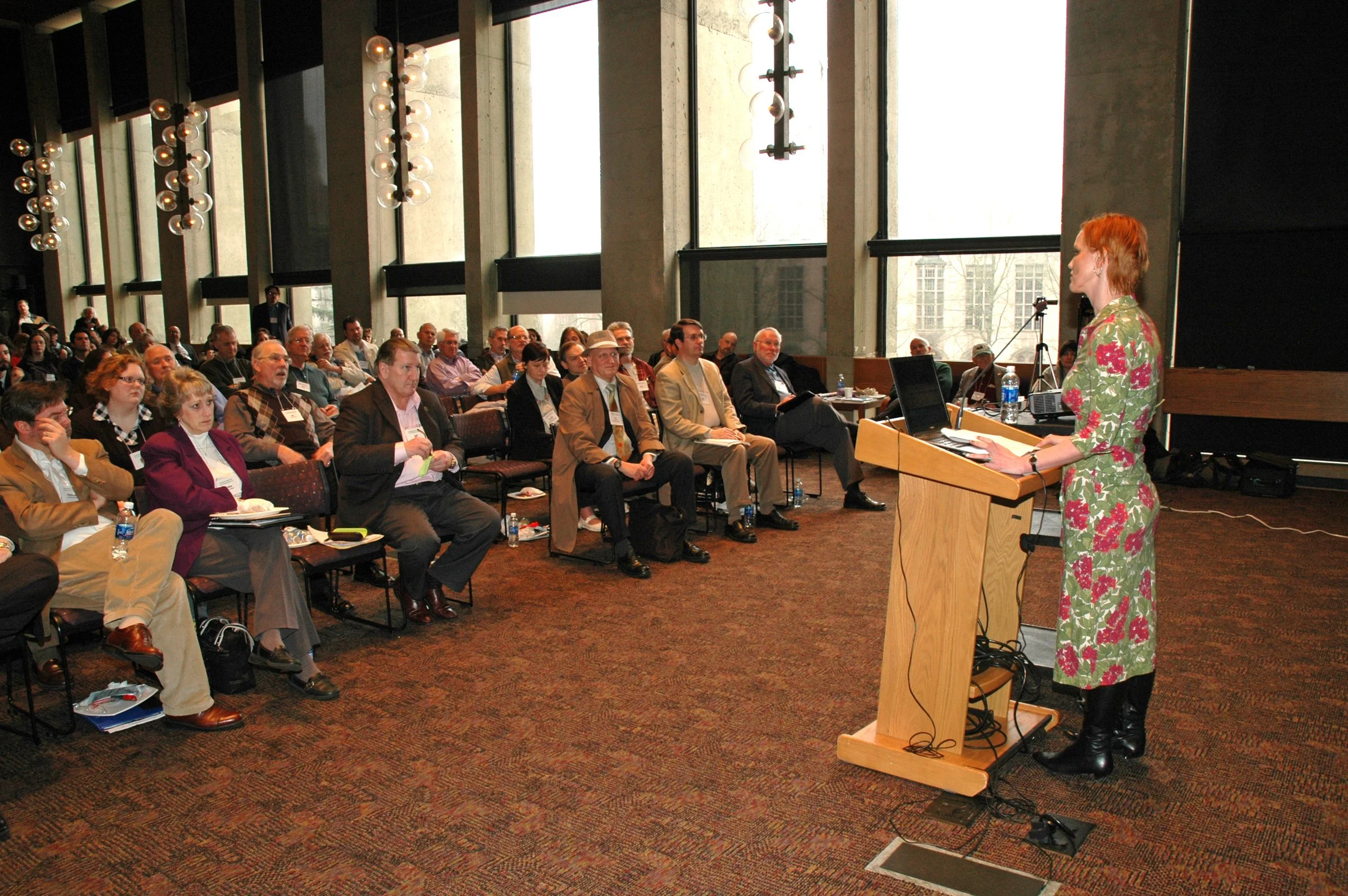

The Coalition conducts public workshops and forums around the state, involving the public, public officials, and the media in discussing government accessibility as provided in the various statutes that assure such access and accountability from our public agencies.
Saturday, July 13, 2013
Western Washington University
FREE Admission
The Washington Coalition for Open Government (WCOG) invites the public to attend a free workshop from 10:00AM to 1:00PM on Saturday, July 13 at Room 224 in the Communications Facility at Western Washington University on East College Way in Bellingham.
Experts on open government issues will lead the attendees through a process that will enable them to effectively exercise their rights under Washington’s open government laws. The purpose of the workshop is to help people understand their right to know what their state and local governments are doing. Attorney Judith Endejan of the Seattle law firm Graham and Dunn and WWU journalism professor Peggy Watt will explain Washington’s open public meetings and public records laws. The workshop will feature general guidance rather than specific legal advice. Reference materials will be supplied.
The Communications Facility is on the south end of campus. Parking is free on weekends in the "C" lots, which are at South College Drive and West College Way (the lots are clearly marked).
May 16, 2013

Essay Contest Winner Daniel Manwell,
Junior at Port Angeles High School
Click here for the press release.
Click here to read the winning essay
Click here to read the runner up essay
Click here to read the top essays
Daniel Manwell, a high school junior from Port Angeles, was named today as the winner of the inaugural Scott Johnson Open Government Essay Contest launched by the Washington Coalition for Open Government.
Manwell's essay argued, "The people of Washington State must remain diligent by demanding their public officials accountability and transparency within meetings, records, documents, or anything else pertaining to the public's interest. Ultimately, it is our informed and voting citizens that will shape our country's destiny. Knowledge is power."
The contest was established in honor of former WCOG board member and Seattle attorney Scott A. W. Johnson. Johnson died of a heart attack last fall not long after he had been elected without opposition as a King County Superior Court judge. He was the son of retired state Public Disclosure Commission executive director Graham Johnson, a member of the WCOG advisory council.

Essay runner-up Nicole Laliberte,
Senior at Woodinville High School
State Budget Solutions: May 16, 2013
By: Jason Mercier
With it being all quiet on the Western Legislative Front, there is one date to keep in mind concerning the ongoing state budget negotiations: June 1.
While there are rumors that lawmakers may wait for the June 18 Revenue Forecast to see if the recent improvement in state economic activity can help bridge the budget divide, state law may make waiting that long a bit tricky.
According to RCW 43.88.080 (emphasis added):
"Adoption of budget. Adoption of the omnibus appropriation bill or bills by the legislature shall constitute adoption of the budget and the making of appropriations therefor. A budget for state government shall be finally adopted not later than thirty calendar days prior to the beginning of the ensuing biennium."
Read more>>
Senators may meet via teleconference during special session; remote testimony options for citizens next?
WA Policy Center: May 15, 2013
By: Jason Mercier
While there isn't much news coming out of Olympia since the Special Session started on Monday there is one development that could hold huge implications for citizens going forward. At a media availability on Monday Senate Republican Leader Sen. Schoesler said that Senators may meet via teleconference to help keep cost down for members living out of the area.
Should these teleconference meetings for Senators be successful they could help grease the skids for efforts to provide citizens remote testimony options.
Read More>>
Court official temporarily blocks release of key video in assault case against SPD officer
Seattle Times: May 15, 2013
By: Steve Miletich
In a ruling Monday, a court commissioner found that Seattle police Officer Chris Hairston would be harmed if patrol-car video were disclosed to the news media before he can argue it shouldn't be made public at this stage of the case.
A King County court commissioner on Monday temporarily blocked the release of patrol-car video considered to be key evidence in an assault case brought against a Seattle police officer.
Redact or Withhold? Will the State Supreme Court's New Disclosure Flow Chart Be Useful?
Foster Pepper: May 10, 2013
Yesterday was a busy day for public records issues, as the Washington Supreme Court issued two detailed decisions relating to the State Public Records Act. In Ameriquest Mortgage Co. v. Office of the Attorney General, the Court held records that include personal financial information protected under the Gramm-Leach-Bliley Act of 1999 (GLBA) must be withheld from disclosure under Washington's PRA, even if the protected information could be redacted. On the other hand, in Resident Action Council v. Seattle Housing Authority, the Court held that records including information protected by certain federal housing regulations must be disclosed under Washington's PRA, after making appropriate redactions.
Read More>>Supreme Court considering cutting records access
Herald: May 10, 2013
By: Eric Stevick
EVERETT -- An advisory committee to the state Supreme Court is considering proposals that could curtail public access to some court records.
One proposal would prevent permanent online access to court records in cases when a suspect makes a preliminary appearance but no criminal charges are ever filed.
Another would allow defendants who've been acquitted or whose cases have been dismissed to seek a hearing before a judge to get the actual paper court records sealed. There is nothing being proposed that would automatically seal documents. A person would still need to file a motion with the court and prove that their case is different from others.
Read More>>Washington's health insurance exchange doesn't have California's problem with transparency
Puget Sound Business Journal: May 9, 2013
By: Valerie Bauman
California's health insurance exchange is fraught with secrecy, thanks to the way that state built its response to federal health insurance reform. But Washington state doesn't have that problem.
The Associated Press published an exclusive report Thursday detailing how California's law grants the state authority to conceal how the state spends money when handing out the lucrative contracts required to build a state exchange.
Public Hearings -- How Much Notice Is Required?
MRSC Insight: May 8, 2013
By: Jim Doherty
MRSC routinely receives calls on this issue, and as with many issues, the answer is: “that depends.” There are many public hearings that cities and counties are required by statute to hold – for instance, when a city or county enacts a moratorium or interim zoning control, adopts the annual (or biennial) budget, adopts a comprehensive plan, etc. Often the statutes that require a public hearing specify precisely how much notice must be given to the public and how the notice is to be provided; sometimes they do not.
To assist with looking up public hearing requirements, MRSC has compiled two handy lists of the many statutes that require cities and counties to hold public hearings: Actions for Which a Public Hearing Is Required in Washington Counties; and Actions for Which a Public Hearing Is Required in Washington Cities and Towns.
Read More>>
Editorial: Bring transparency to King County Housing Authority's shadow agency
The Seattle Times: May 4, 2013
LAST November, the King County Housing Authority quietly granted a 30-year lease on 509 of its apartment units to an obscure nonprofit agency called Moving King County Residents Forward.
The deal happened in an open meeting, as required by the state Open Public Meetings Act, since the housing authority is a public agency. But since then, getting information about how this nonprofit operates has been difficult, since nonprofit agencies aren’t required to operate with the same level of transparency.
That is especially odd because the housing authority created Moving King County Residents Forward. The organizations share identical governing boards, and the housing authority’s deputy director is the nonprofit’s registered agent.
Read More>>Search of KCHA official's browser shows work isn't a priority
The Olympia Report: May 2, 2013
By: Jeff Rhodes
Whoever it was who said you can’t fight city hall obviously knew nothing about public records requests.
Bothell resident Todd Hodgen knew better when he filed an information request last month with the King County Housing Authority for some basic financial information and, in turn, found himself the object of a background search.
An information technology specialist himself, Hodgen subsequently noted that Mark Abernathy, the Housing Authority’s public records officer, had visited his LinkedIn page, indicating he had run a Google search on Hodgen’s name after receiving the information request — a clear violation of state law.
“Public records are just that — public,” said Tim Ford, open government ombudsman in the Washington State Attorney General’s Office. “Anyone is entitled to request any information they please and the agency may not discriminate based on the identity of the requester. No one can be treated differently.”
Juvenile-court records could be sealed
The Seattle Times: April 27, 2013
Open records put youth at a disadvantage
As prime sponsor of House Bill 1651, I was disappointed to see The Seattle Times editorial assert that HB 1651 is unconstitutional [“Editorial: Don’t seal all juvenile-court records,” Opinion, April 22].
Until 1977, all juvenile records were closed to the public without any constitutional issue. Currently, records for certain types of cases are already kept confidential without being deemed in violation of the constitution.
Under HB 1651, juvenile-court proceedings would remain open to the public, satisfying the constitutional requirement that justice be “administered openly.” Furthermore, records would remain available to the courts and law enforcement so that public safety can be protected. Juvenile records would still be available for research purposes to ensure government accountability. They just would not be sold to credit bureaus, as juvenile arrest and conviction records currently are, and would not be put on the web.
Read More>>
On The Record
KBTC: April 25, 2013
In this edition of Northwest Now, On the Record: The battle over your right to know, members of the Washington Coalition for Open Government talk about their efforts to protect citizen's right to examine the records generated by all levels of government under the state's Public Records Act. Washington has one of the strongest open records in the nation, but in forty years since the act was passed, more than 500 exceptions have crept into the law with many cities, countries, agencies and interest groups pushing for more. What can be done to protect your right to know? WACOG President Toby Nixon, Pierce County Auditor Julie Anderson, and News Tribune investigative reporter Sean Robinson will discuss.
Go to video>>
Editorial: Don't seal all juvenile-court records
The Seattle Times: April 21, 2013
THE Legislature is on the verge of passing a bill to automatically seal preconviction court records of less-serious juvenile offenders. The bill, which has passed the House 97-0, did not meet the bill cutoff in the Senate but could still be revived. It is ill-advised and unconstitutional.
The Washington Constitution, Article 1, Section 10, says: “Justice in all cases shall be administered openly ...” The words, “in all cases,” mean what they say and there is a reason for them.
As Toby Nixon of the Washington Coalition for Open Government said in legislative hearings, it has been learned over the centuries that secret tribunals cannot be trusted. Nor can a system of justice be held accountable in aggregate; you have to see specific cases.
Read More>>
Editorial: Legislature racing past participation by public
The Spokesman Review: April 18, 2013
Open government is almost meaningless if the door is 300 miles away.
Each January, the Washington Legislature assembles in Olympia to do the people’s work; as best the senators and representatives know it.
For the next four months, Eastern Washington lawmakers must rely on their staffs, email, snail mail, telephone calls and occasional visits home to keep them in touch with constituents. But keeping up with fast-moving developments in the Capitol, let alone contributing to the discussion of major legislation, is nearly impossible for those constituents, even for addicts of TVW, the state television network that does an excellent job of broadcasting committee hearings and other Olympia activities.
Read More>>
Olympian calls for more legislative transparency
Washington Policy Center: April 16, 2013
By: Jason Mercier
Looks like editors at The Olympian decided to declare April 16 as "Legislative Transparency Day." The capital city newspaper ran two editorials today highlighting our recommendationsto improve the public's access to the legislative process.
The first editorial calls on lawmakers to provide the opportunity for Washingtonians from the far corners of the state to utilize remote testimony options:
When citizens want state legislators to hear their opinions, nothing beats coming to Olympia and testifying in person. When lawmakers sense the passion and force behind public testimony, gleaned from observing body language, it can impact their decision-making.
But when lawmakers schedule public hearings on short notice, traveling to Olympia poses a burden for some, especially those on the eastern part of our state, and for almost everyone except registered lobbyists
The Legislature could mitigate those issues and improve public access to government by employing modern teleconferencing.
Read More>>
Title-only bills skirt constitution
The Olympian: April 16, 2013
By: The Olympian Editorial Board
Among the bills still alive in this legislative session, seven deal with the important topics of education, health care, human services, natural resources and the ever-popular but head-scratching “State Government Act.” We would love to offer an opinion on each of them, but there’s a problem: We don’t know anything about them.
Read More>>
Virtual access to Capitol would benefit citizens
The Olympian: April 16, 2013
By: The Olympian Editorial Board
When citizens want state legislators to hear their opinions, nothing beats coming to Olympia and testifying in person. When lawmakers sense the passion and force behind public testimony, gleaned from observing body language, it can impact their decision-making.
Read More>>
Brian Sonntag inducted into "Heroes of the 50 States: The State Open Government Hall of Fame"
Washington Policy Center: April 12, 2013
By: Jason Mercier
Former State Auditor Brian Sonntag has been inducted into the "Heroes of the 50 States: The State Open Government Hall of Fame."
According to a press release by the National Freedom of Information Coalition:
Brian Sonntag, who retired earlier this year after serving five terms as the elected State Auditor in Washington state, has been selected for induction into Heroes of the 50 States: The State Open Government Hall of Fame.
The National Freedom of Information Coalition (NFOIC) and the Society of Professional Journalists (SPJ) jointly announced Sonntag’s selection as the 2013 inductee today. The formal induction ceremony will take place at Saturday’s luncheon during the 2013 FOI Summit, held this year at the Renaissance Arts Hotel in New Orleans, La., May 17–18.
The State Open Government Hall of Fame is a joint venture by SPJ and NFOIC. It was developed by leaders in both organizations as a way to recognize long-term contributions of individuals to open government in their states.
Sonntag, the 13th individual chosen for the honor since the Hall’s inception in 2003, is the second inductee in a row from Washington and only the third elected official to be included.
Induction into the State Open Government Hall of Fame recognizes 'long and steady effort to preserve and protect the free flow of information about state and local government that is vital to the public in a democracy.' The award is intended to honor individuals—living or dead—whose lifetime commitment to citizen access, open government and freedom of information has left a significant legacy at the state and local level.
The 2012 inductee was Toby Nixon, President of the Washington Coalition for Open Government.
Read More>>
It's Records and Information Management Month!
Washington Secretary of State: April 3, 2013
By: Brian Zylstra
When it comes to event themes, April is just full of them. According to one website, there are at least two dozen different themes, including National Garden Month (good reminder to mow your lawn and pull some weeds) and National Humor Month (Ha!).
But did you know that here in Washington and many other states, April is also Records and Information Management Month? Here is this year's official state proclamation, signed by Gov. Inslee.
RIM Month is designed to promote the professionals working in this field and to emphasize the importance of organizing and maintaining records in any format – paper, electronic, microfilm or magnetic.
Read More>>
Crime News From Inside Seattle PD
Seattle Journalism Commons: March 27, 2013
By: Patrick Fancher
Crime in the Emerald City may not pay, but it is forging a career for local reporter/blogger Jonah Spangenthal-Lee. The lifelong Seattle resident found his niche in journalism almost by accident, while writing for the alt-weekly paper The Stranger as an intern from North Seattle Community College.
"I still don't really know how I ended up on the crime beat," Spangenthal-Lee said in an e-mail interview. "The first few stories I wrote at The Stranger all happened to be cop or crime-related, and I started making contacts and figuring out the cops/court system through trial and error."
The 4-month internship led to a job covering the city's crime beat, and for years he gained valuable experience and established many solid contacts reporting at crime scenes. After parting ways with The Stranger, he wanted to continue crime reporting, but knew it would be difficult landing a position in a newsroom.
Read More>>
Washington's Troublesome Blank Bills
Tax Foundation: March 22, 2013
By: Elizabeth Malm
There's a quirky way to introduce legislation in the Washington State legislature and that's via something called a "title-only bill." A title-only bill is exactly what it sounds like -- a piece of legislation that has a vague title but no body. There are currently 26 title-only bills filed in the legislature, all introduced by Representative Ross Hunter (D-District 48), Chair of the House Appropriations Committee, and Senator Andy Hill (R-District 45), Chair of the Senate Ways and Means Committee.
Read More>>
Title only bills use to circumvent state Constitution
Washington Policy Center: March 18, 2013
By:
Jason Mercier
Not only are title only bills (essentially blank pieces of legislation) not the most transparent way to introduce changes to state law (or perhaps too translucent) but they are used by lawmakers to circumvent the state Constitution. This is why it is disappointing to see 26 title only bills (13 in the House by Rep. Hunter and 13 in the Senate by Sen. Hill) introduced today. Budget chairs typically introduce title only bills so they "don't get stuck" at the end of session.
Read More>>
Bill to block public records requests dies
Herald Net: March 16, 2013
By: Jerry Cornfield
OLYMPIA -- An alliance of government forces has failed to secure help from state lawmakers in dealing with hefty and costly public records requests.
A House bill allowing public agencies to use the courts to block requesters and to limit the time spent compiling records died when it did not come up for a vote by a Wednesday deadline.
Representatives of cities, counties, school districts and prosecuting attorney offices told lawmakers in January that some requests are intended to harass and intimidate employees. House Bill 1128 provided a path to getting a judge's permission not to fill those.
Read More>>
Handling Vague & Complex Public Records Requests:
Developing Your Plan of Attack
The Municipal Research and Services Center (MRSC): March 2013
By: Sara Di Vittorio & Denise Vaughan
Public records requests run the gamut from the simple request for a copy of a police report to the complex request for any and all emails sent or received by an individual with no timeframe limitation. While it may be easy to wrap your mind around the search for records responsive to those easy requests, it can be quite daunting to face a seemingly limitless request. This article focuses on strategies for dealing with seemingly impossible requests that are either too vague or too complex to make responding a simple process.
Read More>>Shining a light on 'public' in public records
Yakima Herald: March 14, 2013
This week is Sunshine Week, which fittingly with the season’s longer stretches of daylight is about shining a light on what the government does and why. The effort started in 2002 as a way to foster a discussion about the need for open government — especially the public’s access to government records. The American Society of News Editors took the lead in this initiative to promote a dialogue about the importance of open government and freedom of information.
Newspapers are involved in Sunshine Week, as are participants from broadcast and online journalism. But it doesn’t stop there. Civic groups, libraries, nonprofits and schools all have scheduled events that foster a discussion about the need for open government.
Read More>>
Online public records access a mixed bag
Columbia Basin Herald: March 13, 2013
By: Tiffany Sukola
Living in a digital age has its benefits.
The internet puts the information a user wants virtually at their fingertips. People have immediate access to scores from the latest game, the stock market and the news, among a myriad of other information available on the web.
But what about public records? Can the average citizen pull up minutes from the latest city council meeting just as easily as they could their local weather?
The answer to that question, unfortunately, depends, said Toby Nixon, president of the Washington Coalition for Open Government. While federal and state agencies often provide access to digital records on their websites, Nixon said smaller local agencies might not offer that convenience.
Read More>>
Government operates best in the light of day
The News Tribune: March 13, 2013
This week is Sunshine Week, when newspapers and civic watchdogs remind public officials that their paramount duty is to the citizens, not to their own self-interest. That duty is best carried out openly and transparently, not hidden behind closed doors and secret documents.
That reminder is badly needed, if action in the Legislature is any indication.
Proposed bills that would have made state and local government more transparent have already died. Now the Washington Coalition for Open Government is just playing defense against several bills designed to obstruct the public’s right to know.
Read More>>
Defend public records law
HeraldNet: March 12, 2013
You monkey with language, and a bill in the Legislature quickly betrays its stated mission. (Beware the intersection of marketing and public policy.) Lipstick on a goat is still a goat. That's the case with HB 1128, a bill dressed in pro-public-records language that will simply obstruct access to public records.
The irony? This marks the beginning of National Sunshine Week, a time to noodle and celebrate access to public information.
Read More>>
Sunshine week celebrates Washington's right to open public records
The Bellingham Herald: March 12, 2013
By: Peggy Watt
Nearly fifty years ago a middle-school student and her friends set a major free speech case into motion by wearing a black armband to school to protest the Vietnam war.
They subsequently protested their suspension from school. And eventually won: In 1969 the U.S. Supreme Court ruled in Tinker vs. Des Moines School District that neither "students or teachers shed their Constitutional rights to freedom of speech or expression at the schoolhouse gate."
Read More>>
Handling Vague & Complex Public Records Requests: Developing Your Plan of Attack
MR&SC: March 2013
By: Sarah Di Vittorio and Denise Vaughan
Public records requests run the gamut from the simple request for a copy of a police report to the complex request for any and all emails sent or received by an individual with no timeframe limitation. While it may be easy to wrap your mind around the search for records responsive to those easy requests, it can be quite daunting to face a seemingly limitless request. This article focuses on strategies for dealing with seemingly impossible requests that are either too vague or too complex to make responding a simple process.
Read More>>
We believe in open government in all contexts
The News Tribune: March 10, 2013
By: Karen Peterson
Today is a holiday as patriotic as the Fourth of July. It is Sunshine Sunday and the beginning of Sunshine Week, both of which promote open government.
The American Society of News Editors, of which I’m a member, helped launch Sunshine Week in 2005. “Though created by journalists,” the ASNE website states, “Sunshine Week is about the public’s right to know what its government is doing, and why.”
Questioning what our government is doing and why has led The News Tribune to some interesting places in recent weeks.
Reporter Sean Robinson asked those questions as he conceived of his story on today’s front page. He knew the state had cut funding for mental health treatment. He knew people with mental illnesses had committed sensational crimes in our community over the past year.
Read More>>
Courts, in secret
The Wenatchee World: March 9, 2013
By: Editorial Board
Washington is a state where open government is the norm, and open public records a fundamental fixture in law. This is, or should be, especially true in the court system, where open justice is a constitutional requirement.
But last week the state House voted to require a large share of our justice system to operate in complete secrecy, out of the public eye, closed to scrutiny, the results of legal process kept beyond an impenetrable barrier.
Read More>>
Seattle Police blogger Jonah Spangenthal-Lee honored by Coalition for Open Government
The Seattle Times: March 9, 2013
By: Jonathan Martin
Jonah Spangethal-Lee, the Seattle Police Department’s blogger-in-residence, is being honored at Saturday’s Washington Coalition for Open Government convention for his witty pursuit of government transparency.
A former crime journalist, Spangenthal-Lee energized the SPD blog with posts such as “Marijwhatnow,” the Seattle Police’s guide to now-legal marijuana. The Coalition is applauding his approach, which he summed up this way: "If there's information we can give to anyone, we should give it to everyone."
Read More>>
Sun rising in House Rules Committee?
Washington Policy Center: March 9, 2013
By: Jason Mercier
Tomorrow (March 10) marks the beginning of National Sunshine Week - a time dedicated to celebrating the importance of the people's right to know and the need for strong open government laws. Judging from rumors in the House Rules Committee, the sun may continue to shine bright on Washington's landmark public records law. The word is Speaker Chopp has placed a leadership hold on HB 1128 (Regarding local agencies' responses to public records requests), keeping the bill from going to the House floor before Wednesday's cutoff date (March 13). HB 1128 was sent to the Rules Committee nearly a month ago on February 12.
Read More>>
House votes to seal most juvenile court files
The Olympian: March 8, 2013
By: Jimmy Lovaas
The state House moved Wednesday to largely reverse a 36-year-old law making juvenile court files public, drawing fire from open records advocates.
The proposal, which passed the House unanimously and now heads to the Senate for consideration, would require most juvenile offender records to be sealed. The only exception would be for youths found guilty of serious violent offenses, some sex offenses and arson.
Under current law, offenders can petition a court to have their record sealed, but only under certain circumstances.
Read More>>
Op-ed: Don't let local governments gut the Public Records Act
Special to The Seattle Times: March 7, 2013
By: Katherine George
FOR 40 years, Washington's Public Records Act has been a window for anyone to see what's going on in state, county and city governments, schools and other local agencies. As a recent example, this landmark law helped The Seattle Times uncover troubles leading to Rob Holland's resignation from the Port of Seattle Commission.
The bad news is: Our local governments are fighting hard to weaken the act. And some state legislators are championing the cause of scaling back the public's right to know.
Do you want to know how your tax money is spent, how well a program is working, or whether an elected official is meeting your expectations? Records can tell stories that you will never hear from news releases.
Keeping access to public records
Columbia Basin Herald: March 1, 2013
By: Editorial Board
Americans have many freedoms that are the envy of other countries, including freedom of speech, religion, the press, equal justice and the right to bear arms.
Another right Americans have is access to public records generated by state, county and federal government agencies. Requesting and receiving public records help keeps people informed and provides checks and balances for the government.
It is why we wanted to make you aware of the following three pieces of proposed legislation being considered by state legislators.